Home About Us Services System Projects Contact
Careers Training

Call us: 022-40121534 / 9987439445

FIRE DRILL TRAINING

Make every fire drill count.

Well-planned fire drills turn panic into a calm, practiced response. Our training helps your team know exactly what to do before an emergency happens.

“A fire drill is not just a formality it’s a rehearsal that can save lives.”

We guide your organisation through a clear, practical fire drill procedure so every employee understands their role, route and responsibility.

Employees participating in a fire drill and evacuation training

Fire drill procedure at a glance.

A good fire drill follows a simple rhythm: plan, brief, alarm, evacuate, account, review. Our team helps you create a drill routine that fits your layout, risk profile and staff strength.

  • 1 Prepare the scenario: choose exits, routes, and safe assembly points.
  • 2 Sound the alarm: trigger the drill using your fire alarm or communication system.
  • 3 Evacuate & assemble: staff move calmly along marked routes to the assembly area.
  • 4 Roll call & report: supervisors account for every person and report any gaps.
  • 5 Review & refine: identify delays, confusion or bottlenecks and update the plan.
Employees assembled at a fire evacuation point during a drill

FIRE DRILL ROADMAP

YOUR 5 STEP PLAN

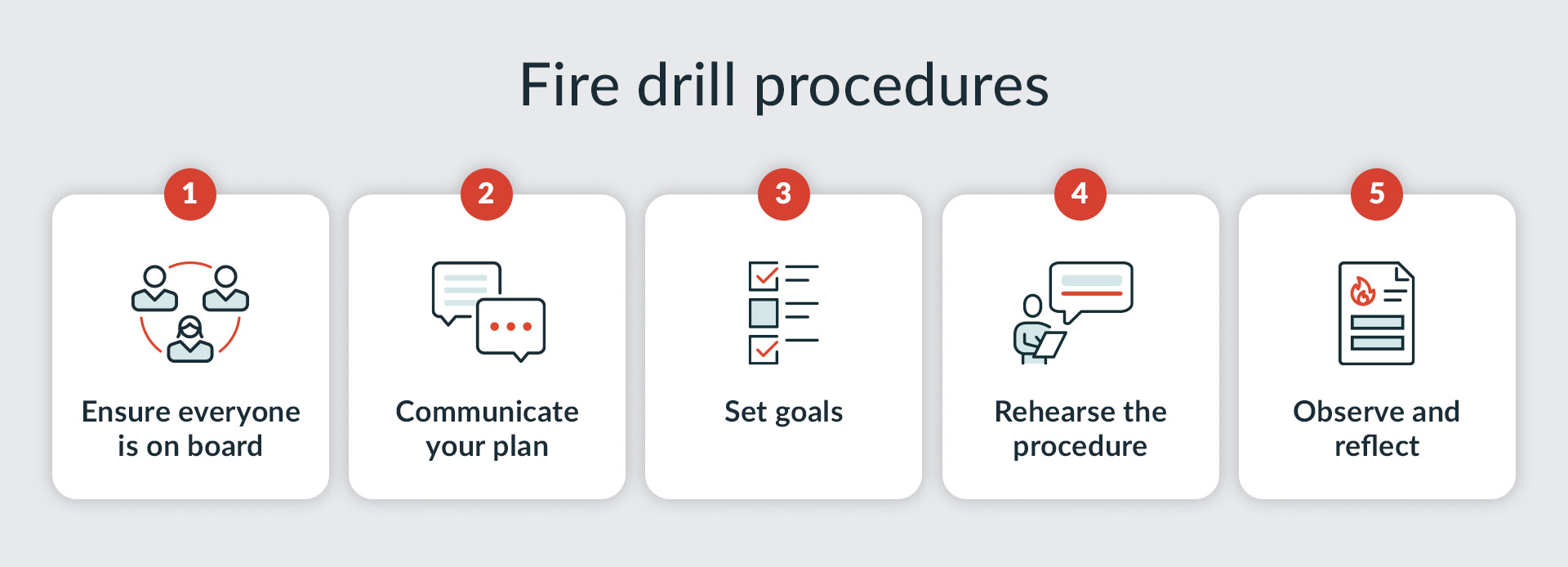
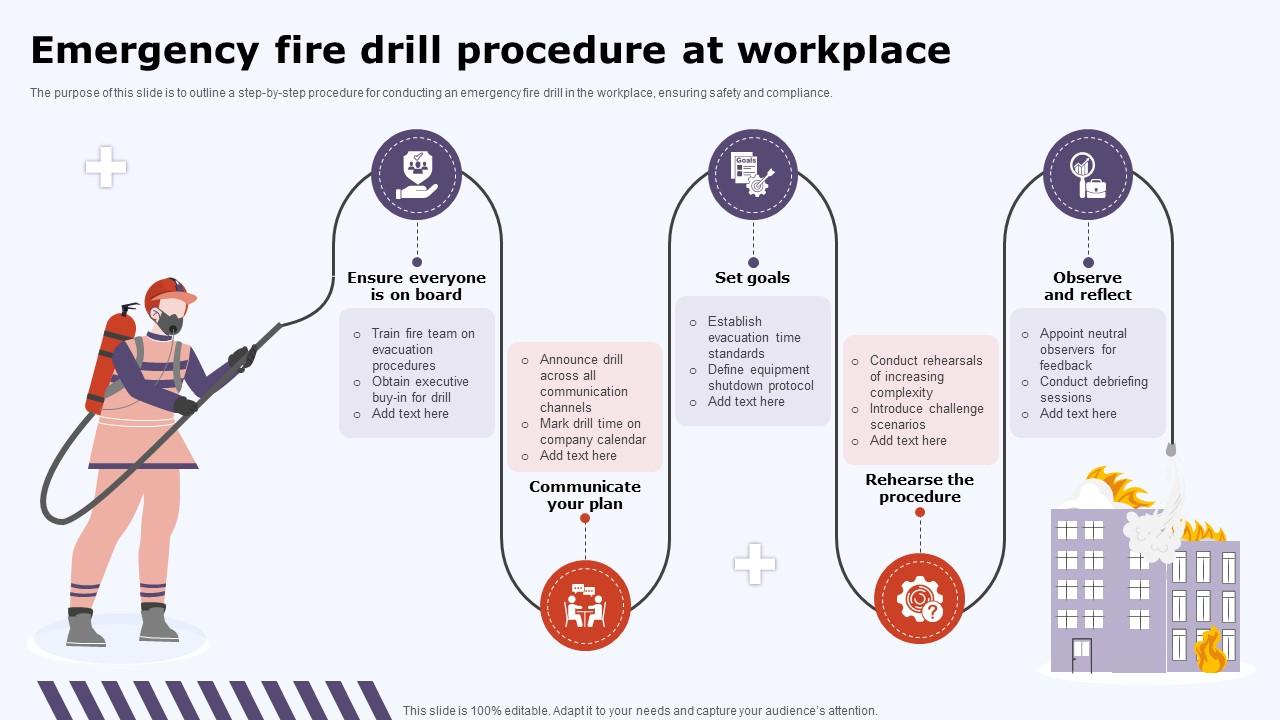
Use this simple framework to structure every fire drill—from the very first planning meeting to the final debrief.

STEP 1 Coordinate the plan

Coordinate the plan

Identify your fire drill coordinator, key wardens and safety team. Map your building, exits, and high-risk zones and agree on clear roles before the first drill.

STEP 2 Communicate with the team

Communicate with the team

Brief employees in advance—what the alarm sounds like, where to go, and what not to do. Good communication reduces panic and confusion during the drill.

STEP 3 Set goals for success

Set goals for success

Define simple, measurable targets—for example, total evacuation within 3–4 minutes and 100% headcount confirmation at the assembly point.

STEP 4 Practice the drill plan

Practice the drill plan

Run the drill exactly as planned. Observe behaviour on staircases, at doors and at assembly points. Make note of delays, choke points or unsafe actions.

STEP 5 Reflect & improve the plan

Reflect & improve the plan

Hold a short debrief with wardens and management. Capture what went well and what needs work, then update routes, signage, or training before the next drill.

Fire wardens briefing staff during safety training